
Louisiana Property Tax Records
Louisiana property tax records are kept by the assessor and sheriff in each of the state's 64 parishes. These records show how much a home or lot is worth, what taxes are due, and who owns each piece of land. You can search most Louisiana property tax records from home through parish assessor websites and online tax payment portals. Some parishes let you look up tax bills, pay what you owe, and view maps of your lot all in one place. This page covers state laws, search tools, and links to parish offices that hold these records across Louisiana.
Louisiana Property Tax Quick Facts
How Louisiana Property Tax Records Work
There are no state property taxes in Louisiana. All property taxes come from local parish and city governments. Each parish has an elected assessor who finds, lists, and values every piece of property. The assessor puts that data on the tax roll each year and sends it to the Louisiana Tax Commission for review. The commission checks the rolls and makes sure values are fair and even across parishes.
The parish sheriff acts as tax collector in most cases. Tax bills go out in late fall and are due by December 31. If you miss the deadline, interest starts at one percent per month on January 1. By February 1 a ten percent penalty kicks in. The property can end up at a tax sale if taxes stay unpaid. Under La. R.S. 47:1951, all real and personal property in Louisiana is subject to taxation unless the state constitution grants a specific exemption.
You can view the Louisiana Tax Commission's STAX portal for assessment data and appeal forms.
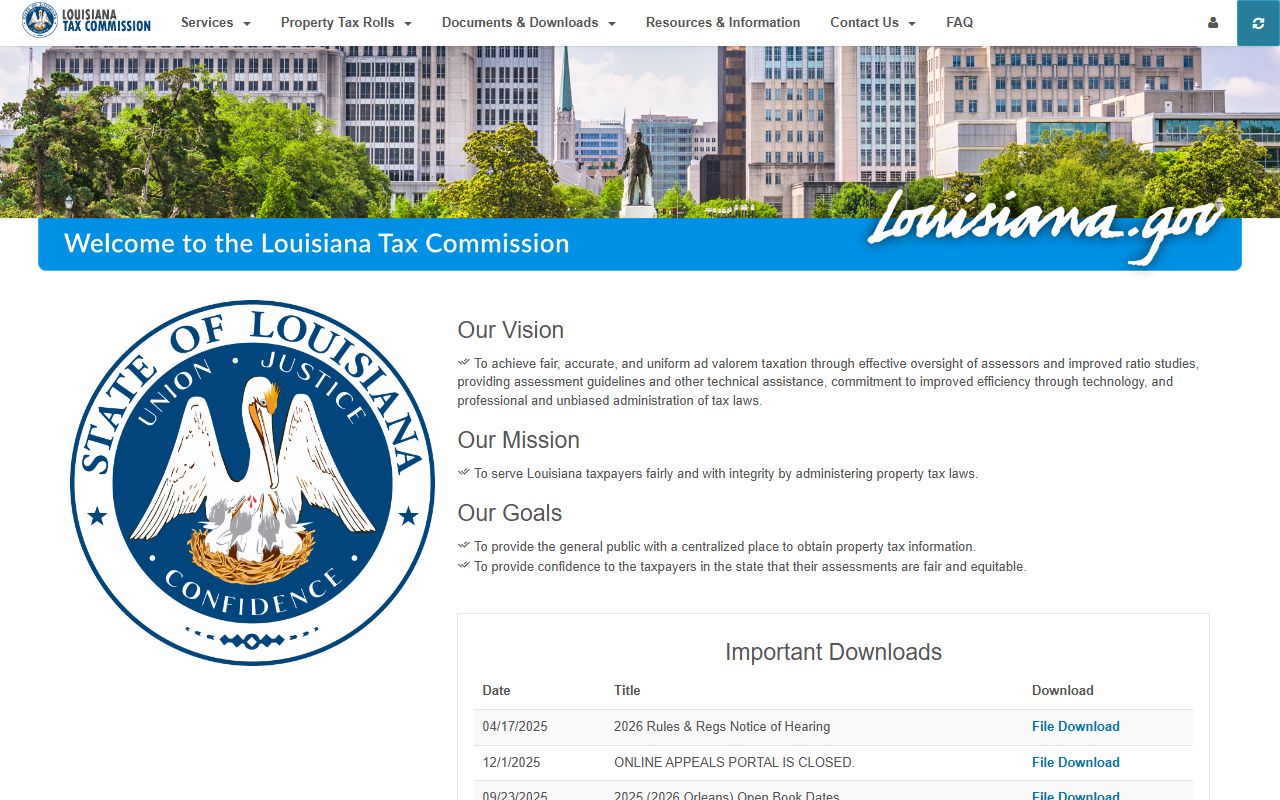
The portal shows tax roll data by parish and lets you check ratio study results.
Louisiana Property Tax Assessments
Property in Louisiana is assessed at a set share of its fair market value. La. Const. Art. VII, Section 18 sets the ratios. Land and homes are assessed at ten percent of fair market value. Commercial buildings and business personal property sit at fifteen percent. Public service properties like utilities and railroads get a twenty-five percent rate. These ratios stay the same in all 64 parishes.
Fair market value is the price a willing buyer and a willing seller would agree on under normal conditions, as defined by La. R.S. 47:2321. Assessors use three approaches to set that value: the sales or market approach, the cost approach, and the income approach. The final number goes on the tax roll as your assessed value. A home worth $200,000 would have an assessed value of $20,000 at the ten percent rate.
Real property must be reassessed at least once every four years under La. R.S. 47:2331. The Louisiana Tax Commission decides which parishes get reassessed in which years. Business personal property is reassessed every year. Public service properties like railroads and pipelines are assessed by the Tax Commission itself, not by parish assessors.
Note: Agricultural, marsh, and timberland may be assessed at use value rather than fair market value if the owner applies.
Homestead Exemption in Louisiana
The homestead exemption is one of the most common property tax breaks in Louisiana. Under La. R.S. 47:1703 and Article VII, Section 20 of the Louisiana Constitution, the first $75,000 of a home's market value is exempt from property taxes. That works out to $7,500 of assessed value. You apply once at your parish assessor's office. Bring your act of sale and a photo ID showing the property address.
Only your main home qualifies. You can have just one homestead exemption per family per parish. If you move, tell the assessor right away. The exemption does not apply to most city taxes. Orleans Parish is the exception since it is a consolidated city-parish where the homestead exemption does cover city taxes. Certain police and fire taxes in New Orleans still fall outside the exemption.
The Louisiana Assessors' Association has a directory of all 64 parish assessors. You can find contact details and links for each office.

Use the directory to reach your parish assessor for homestead exemption forms and property searches.
Senior Assessment Freeze for Property Taxes
Louisiana offers a special assessment level for homeowners age 65 and older. La. R.S. 47:1703.1 lets qualifying seniors freeze the assessed value of their home. The freeze stays in place as long as you own and live in the home and your income stays below a set limit. The income cap changes each year.
A frozen assessed value does not mean your taxes can never go up. If a taxing body raises its millage rate, your bill will still rise even with the freeze. The freeze only locks the assessed value, not the tax amount. A surviving spouse who is at least 55 years old can keep the freeze if they meet all other rules. You must bring proof of age and income to the assessor's office to apply.
Search Louisiana Property Tax Records Online
Most Louisiana parishes have a website where you can look up property tax records for free. You can search by owner name, street address, or parcel number. Many parishes use third-party systems to host their records. The most common ones include actDataScout, SNS Tax Payments, GeoPortal Maps, and SmartCAMA.
The Louisiana State Land Office keeps historical property tax records going back to 1880. These are adjudication records for properties seized for non-payment of state taxes. The database covers tax years 1880 through 1973. You can download document images in TIF format at no cost. Properties adjudicated from 1974 onward are the responsibility of individual parishes.
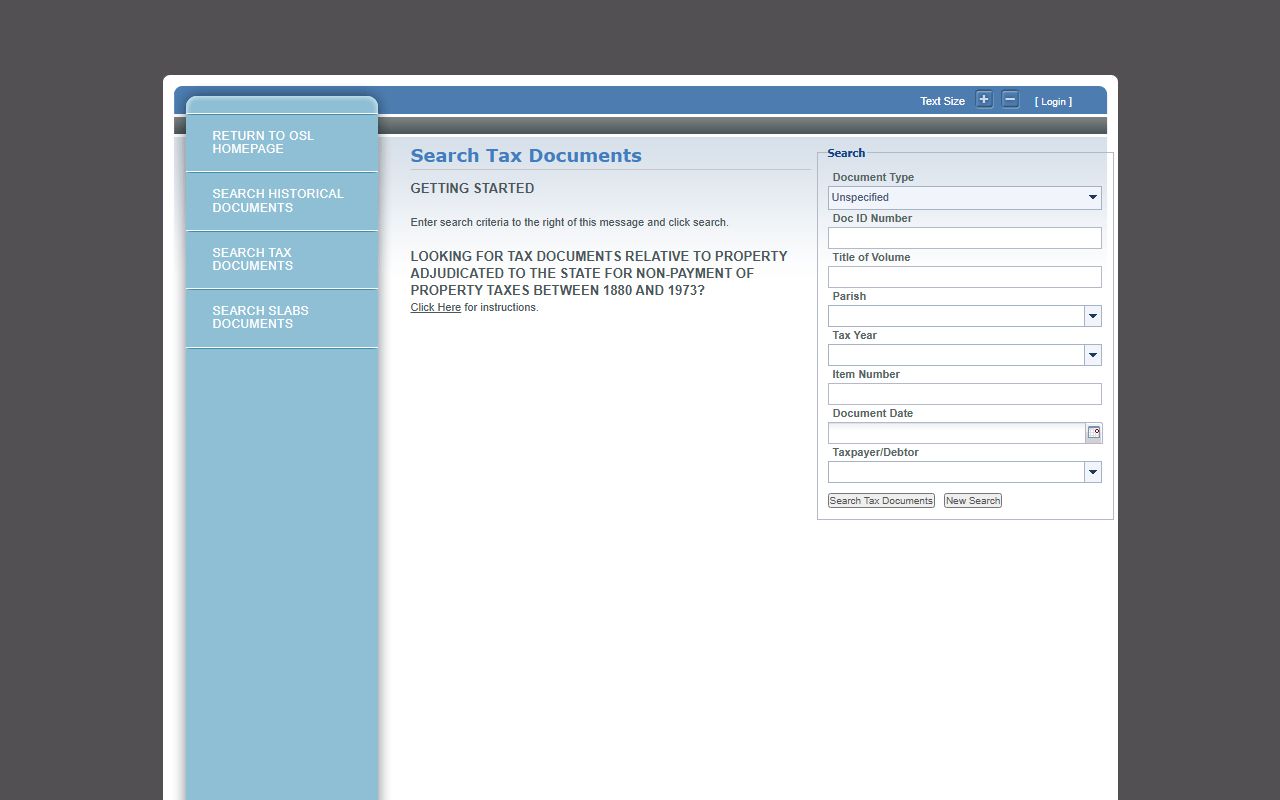
Search historical tax documents by parish, tax year, or document ID number.
The State Land Office also provides access to the SLABS database for real estate records on properties owned or leased by state agencies. You can search and view these documents through the Division of Administration website.
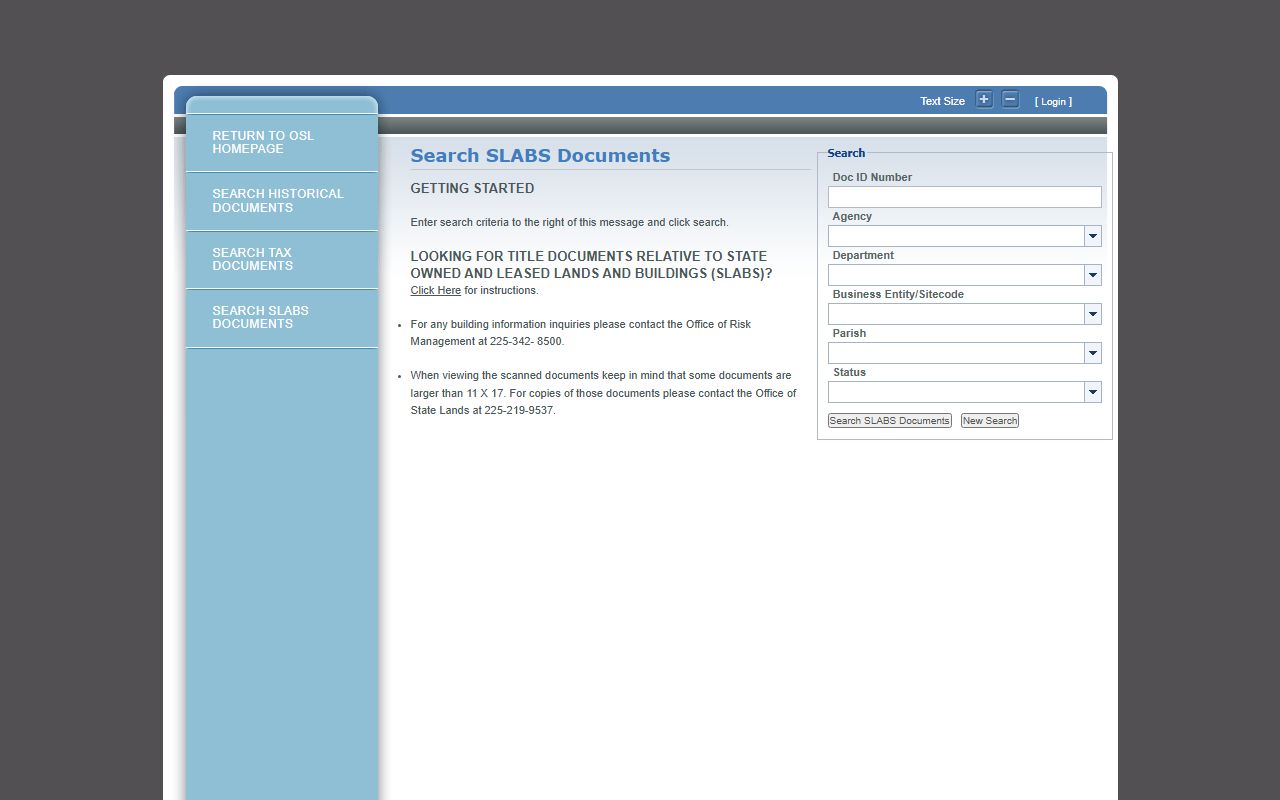
The SLABS system covers state-owned and leased properties in the LaGov Real Estate Inventory.
Property Tax Appeals in Louisiana
If you think your property assessment is wrong, you have the right to appeal. The process starts at your parish assessor's office during the Open Book period. Under La. R.S. 47:1992, assessment lists are open for public review for 15 days, usually between August 15 and September 15. The exact dates vary by parish.
Talk to the assessor first. If you still disagree, fill out Form 3101A and file an appeal with the parish Board of Review. The board holds a hearing and makes a decision. If you dispute their ruling, you have ten business days to file Form 3103.A with the Louisiana Tax Commission. The commission will hold its own hearing. After that, you can take the matter to District Court within 30 days. Keep copies of all papers and use certified mail for every step.
The STAX portal provides appeal forms and information about the Tax Commission's process. The portal is seasonal and closes during non-filing periods.
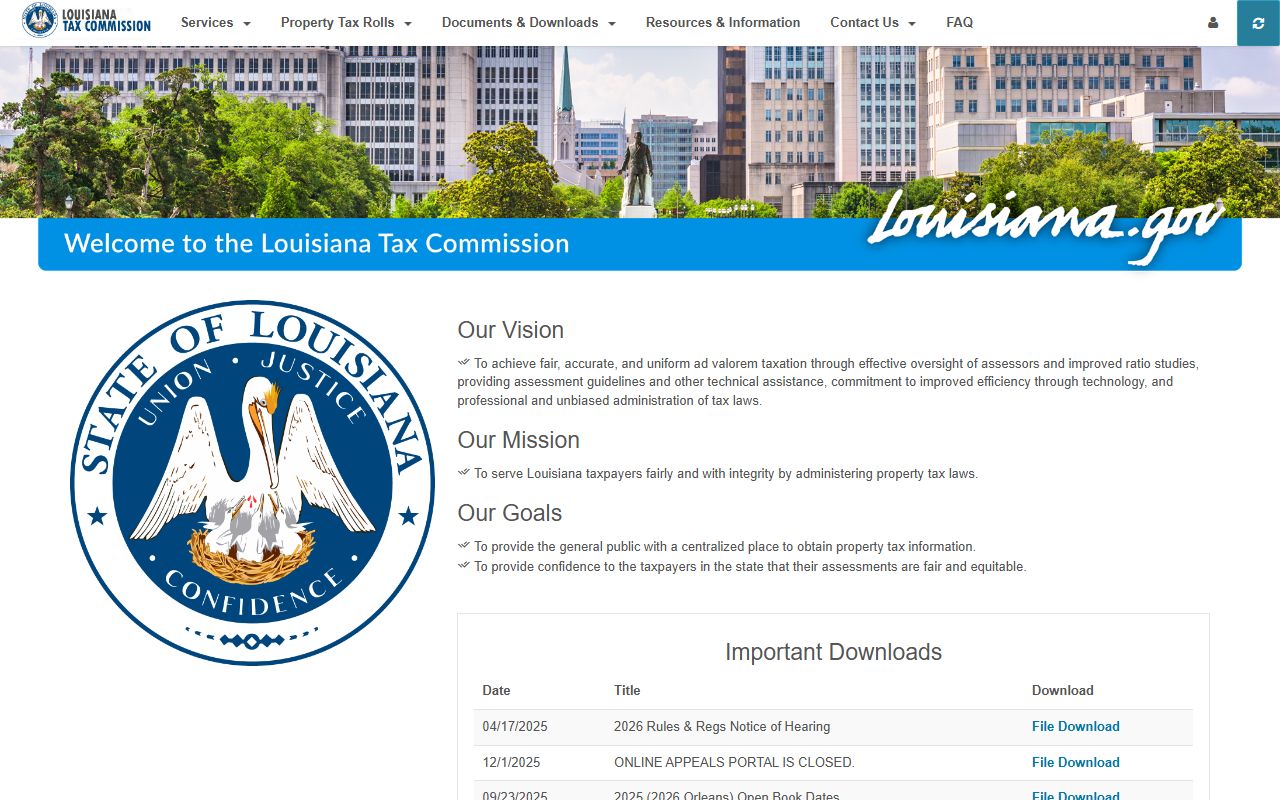
Check the portal for current filing windows and downloadable appeal forms.
Paying Louisiana Property Taxes
Tax bills go out in November in most parishes. The deadline is December 31. Orleans Parish is an exception with a January 31 due date. You can pay at the sheriff's office in person, by mail, or online through parish payment portals.
Many parishes use the SNS Tax Payments system for online payments. Others use TCM Online or their own systems. You search by notice number, parcel number, taxpayer name, or address. Credit card and e-check options are available, though convenience fees apply. Some parishes let you pay multiple notices at once. A few parishes like Lafourche accept partial payments of at least 25 percent each.
The Office of State Lands handles properties adjudicated to the state for non-payment of taxes prior to 1974. If you are looking for historical tax sale records, this is the place to search.
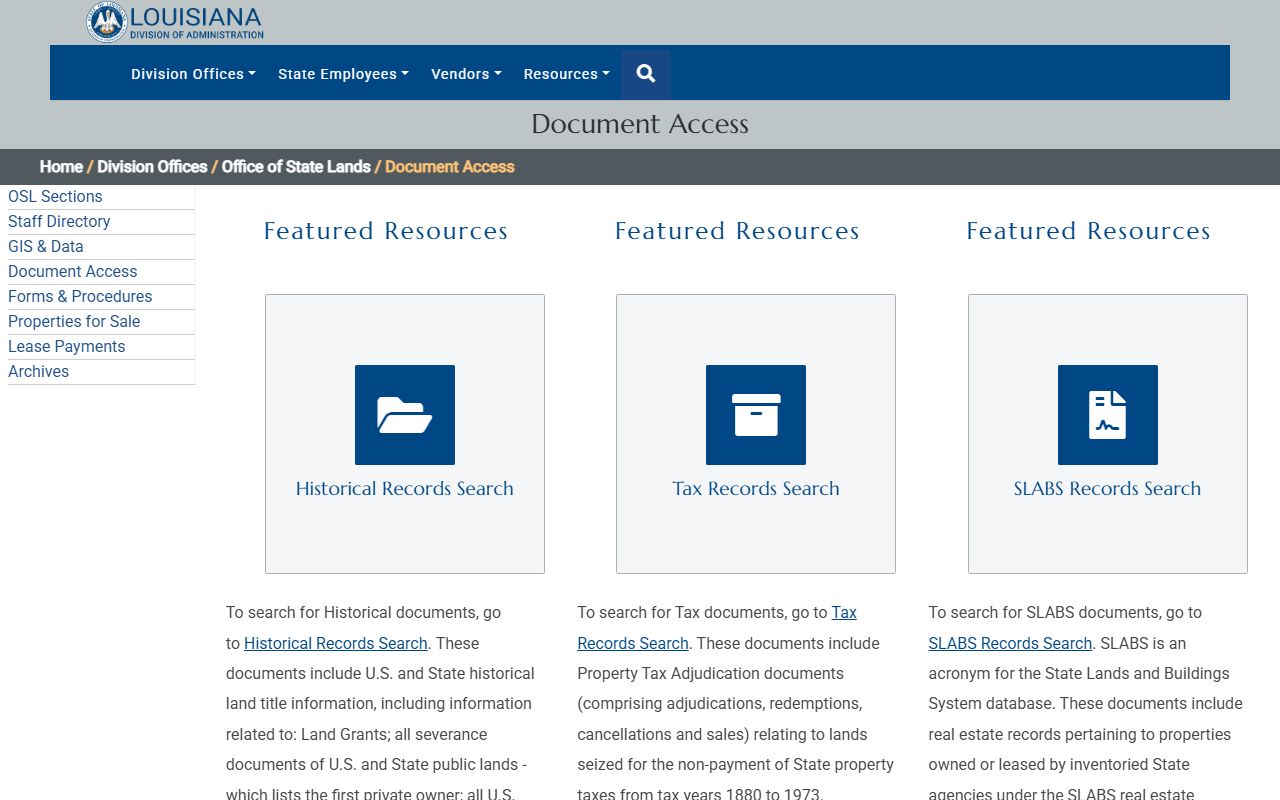
Download historical adjudication documents going back to 1880 at no charge.
Tax Sales and Adjudicated Property
Properties with unpaid taxes can be sold at a public tax sale. Louisiana law gives the owner a three-year redemption period in most cases. After that, the buyer can take ownership. Some parishes handle adjudicated property sales through CivicSource, which runs online auctions for tax-delinquent properties.
The Office of State Lands lists properties adjudicated to the state that are available for purchase. These are mostly pre-1974 properties. Contact them at 225-342-4579 for details.
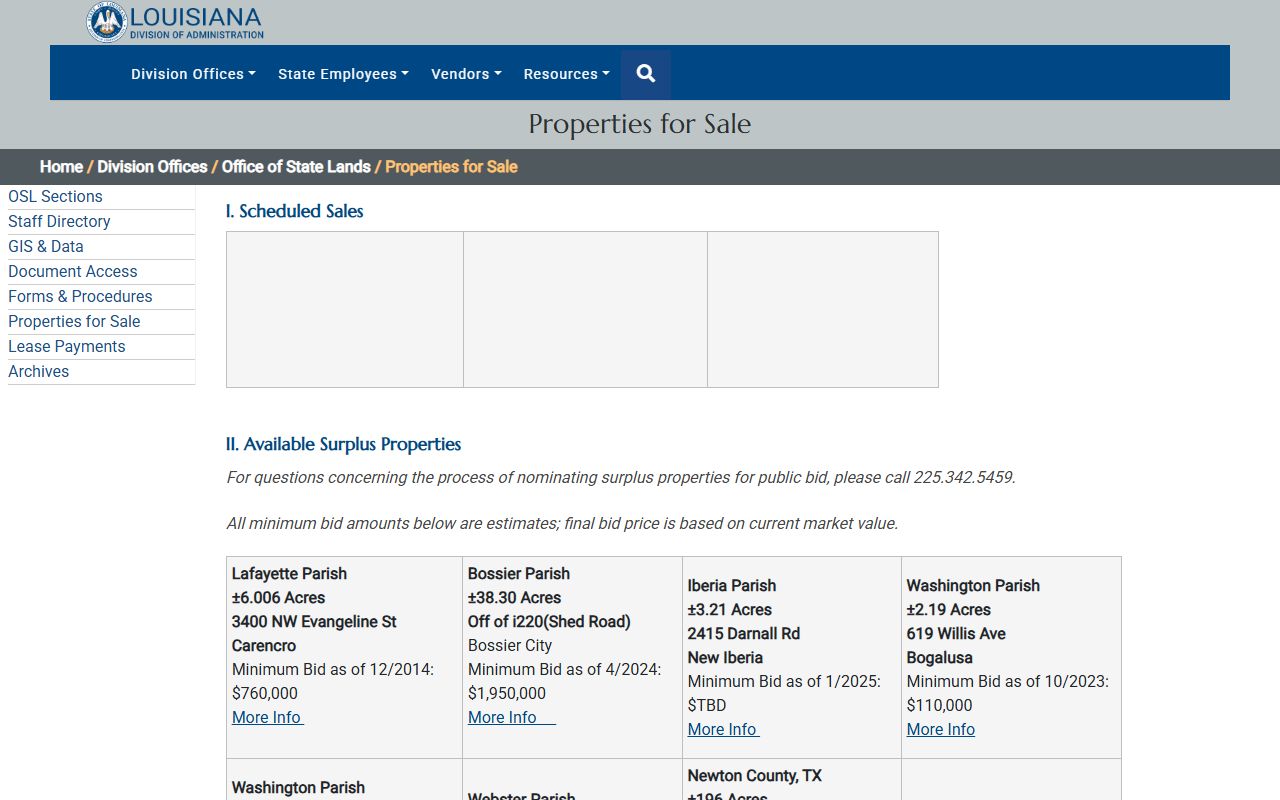
State-adjudicated properties may be available for purchase through the Office of State Lands.
Louisiana Property Tax Agencies
Several state agencies play a role in Louisiana property tax records. The Louisiana Tax Commission oversees assessments, certifies rolls, and hears appeals. You can reach the Baton Rouge office at (225) 925-7830 or the New Orleans office at (504) 568-5259. The physical address is 1885 Wooddale Boulevard, Baton Rouge, LA 70806.
The Louisiana Department of Revenue handles income and sales taxes but does not administer property taxes. If you call them about a property tax question, they will send you to your parish assessor or the Tax Commission.

The Department of Revenue handles state income and sales tax but not property tax assessments.
If you need to reach the Department of Revenue for other tax questions, their general phone number is 855-307-3893. Hours run Monday through Thursday from 8:00 AM to 4:20 PM, and Friday from 9:00 AM to 4:20 PM. They have regional offices in New Orleans, Lafayette, Alexandria, Monroe, and Shreveport.
Find regional office addresses and phone numbers on the contact page.
Browse Louisiana Property Tax Records by Parish
Each parish has its own assessor and sheriff who handle property tax records. Pick a parish below to find local contact info and search tools for that area.
Property Tax Records in Louisiana Cities
Most Louisiana cities do not collect property taxes on their own. The parish sheriff collects taxes for cities and parishes together. Pick a city below to learn how property tax records work in that area.